Showing posts with label Wireless. Show all posts

Monday, April 2, 2012

Convenience vs Consistency In Marconi’s Magical Ether

Convenience vs Consistency In Marconi’s Magical Ether


Marconi, the fantastical genius (second in renowned and sheer infamy only to Tesla, despite Yahoo Serious's portrayal ) who brought us the ability to transmit information from one location to another without the need for miles of wire would be amazed but quite comfortable with our wireless world. After all  the first wireless phone/mediadelivery system was in use by 1922.  The tools and interfaces would no doubt astound him, yet the process and application would be as natural as reading the newspaper.  The modern 'Golden Age of Wireless'  is mother's milk to most of us - we are as afraid of its presence, with a few odd exceptions, as we are of indoor running water. So why does it so often befoul and frustrate us?


This dichotomy was brought to my attention when, in the process of teaching a class on Ethernet and Wireless essentials this past week,  I opened my #inSSIDer tool to show what our local Wi-Fi looked like.  The plan was to use the live readings as a simple example of just how interference comes about.  Well I was, admittedly, just as stunned as the class.


Whoa! This is what the 2.4GHz frequency range looks like in the Secaucus, NJ warehouse where I spend a good deal of my working day - a somewhat isolated space. How could the IT manager let this happen, someone wondered aloud.


I have experienced similar reactions when teaching high school students about Ethernet, specifically Wi-Fi and RF principles. I have found that even many of these Millennials were unclear on just what is going on beyond the very basic setup.  


Why would this be?


Wireless Internet Access is ubiquitous, so much so that it has become an appliance and as such is nearly invisible to most folks - until it ‘stops working’.  In other words, it is like using a telephone, you may need to know whether to dial 9 to get an outside line and the number you are calling but other than that - it just works.  Off the shelf manufactures sell us the instant gratification of ‘pushing the Little Red Button’ to set up and connect - no need to worry about what is going on behind the curtains and in fact, these boxes intimate,  it may just be dangerous to look dear Icarus.

Our own industry, one which prides itself on being the most informed on the multitude of distinct technological disciplines, is still is coming to grips with the world of Wi-Fi.  Six years ago as the install industry was still  making the hard change to Ethernet many manufactures started to introduce Wi-Fi based products. As a technical support manager  I witnessed first hand the confusion from lack of knowledge in the field and in the support room.  The initial thought and assumption was that the technology was fairly common and therefore would be in the general knowledge meme of the installers. We could not have been more wrong.  It turns out that a great majority of our clients had very little experience with wireless Internet setup, let alone Ethernet in general.  This is not a dig at the companies and individuals involved - my discussions with other offices and support personnel at other manufacturers (yes many of us chat in private forums, even with competitors -  we are professional and know where the lines are, get over it) confirmed an industry wide problem.  


As a result of this miscalculation it became common to work hour long support calls-walking an installer step by step through the basics of setting up the Wi-Fi router/ access point.  In my company a great effort was made to teach the client on the other end of the phone line just what we were doing and what each process was for - ‘...teach a man to fish...’. While this total support helped the individual, it did nothing to stem the tsunami.   The recognition that our incorrect presumptions had a detrimental effect on call times pushed us to develop an extensive training and certification program for staff and dealers. The process took about a year to show a decline in calls and service time on the basic concepts but reduce it did. Now we could deal with issues stemming from new technologies like WDS  and general RF interference which, once recognized caused apoplectic fits.   


RF and EMF interference are funny things, if you are unaware or just limited in knowledge it can be a very vexing problem. The question is just where  can you learn the essential techniques and troubleshooting without having to digest electrical engineering text books or RF circuit design manuals?  My personal path started with having the responsibility of testing wireless microphones become part of my job description. 


Unlike wireless data networks which have data detection and correction techniques built into the transmission / reception process,  audio cannot send a request for the vocals to be resent live. This means that the concepts can be learned without getting into the minutia of error checking and checksums.   Many RF mic manufactures publish pamphlets on the basics of best practices. As we gathered more and more material books and tear-sheets   I studiously and obsessively  hand copied the main points, sometimes the whole booklet, into a small sketch book. Remember this was just pre-world wide web days and portable devices were barely smaller than a breadbox. 


I have always found that just as many audio concepts can be more easily taught by first starting with real world applications of Standard POTS (Plain Old Telephone) lines so can many RF basics be explained using wireless microphones.  This may not be the exact connection you may need but it is a start. I would suggest the following primers: 


Crestron Best Practices for Installation and Setup of Crestron RF Products  (shhh, don’t tell anyone I helped write and edit this) 


Wireless Microphones and the Audio Professional


Texas Instruments has a great overview ‘deck’ entitled RF Basics, RF for Non-Engineers


Shure has some interesting documents that discuss some of the tertiary issues 


You could just trust that is will all work but then it is a question of  program or be programmed - which brings us back to the maligned IT manager we 


mentioned above. Looking at the spectrum analysis it might strike you that it  is amazing that any of the connections work at all.  The Truth is that the network administrator, like you and me, can only contain not control  the unwieldy beast of unlicensed RF. 


Saturday, December 20, 2008

BrundleFly?

One has to wonder if the quest for wireless HD distribution is more closely related to the Philosophers Stone then Grand Unified Theory at this point.   A friend of mine compared this to eating a cake by saying 'you never know if its going to taste good until you eat it, and then its too late.  A lesson in confections from the kitchen of Mrs. Schrodinger indeed.


Wireless HD distribution is something I would install in the blink of an eye, were I confident it would\could work reliably in both speed and location. My home is not new, not nearly new, not was new to my father  in his youth; in fact my home is just barely considered new by the strict definition of antique. While spacious and accommodating my 1901 colonial home still has walls of 1x3's and lathe under plaster. I spent a good portion of my formative childhood tearing down just such walls in the numerous homes we lived in to rebuild and update. I know just how difficult it is to retrofit these homes with modern wiring without planning a complete renovation. It is not a task I look forward to with any pleasure. 


 I also have years of experience working with wireless systems of all sorts and know full well the fragility of the connective infrastructure.  RF transmission of media can be summed up simply  - Wireless transfer of data is the most convenient method yet developed, it is also the most inconsistent and unreliable form ever put into operation. (I think this statement has a very Mark Twain lilt to it and given his relationshipp with Tesla quite possibly attributable to him in an alternate Universe).


The EE Times has published, as part of a year end 'Hot Technologies to Watch for in 2009, an eye opening article on the the relative stasis HD home distribution over RF has exhibited. In the article 'Not getting the big pictures(s) yet', the EE Times editors describe 802.11n as 'troubled', UWB as a 'failure' and the 60GHz as '...too immature...'.  


So, why pursue an RF HD distribution model?  HDMI has some notorious short falls when it comes to whole house distribution which include but are not limited to cable length and physical connectors. It is a market that has huge potential to make redundant  an entire category of cable and distribution.  Trouble is what we have currently and for the near term results in an end video more BrundleFly then Seth Brundle. 


I suppose I should take a deep breath, thank my mother for having the forethought to prepare me for this moment and  with wrecking bar in hand begin the process of renovating to run wire.


Saturday, December 13, 2008

Then where would I keep my pencil?

While I only rarely write about the newest or hot item, I came across the Truphone product. The Truphone allows a user to turn a iTouch into a wifi ready phone.  It struck me that this would be a steampunk application from the perspective of my three year old (or at least when he is old enough to understand such things).


So, an iPhone that is not an iPhone can now be an iPhone(ish). VerySteampunk, in a post post modern way -(maybe neomoderist?).


If you are unfamiliar with the culture of steampunk think of a world where Victorian England driven by the revolutionary difference engine creates a world which has many of the same modern convienecines  of the 21st  century just not based on the transistor.  A good start is " The Difference Engine"  byBruce Sterling and William Gibson. Much in the same fashion as the Maker Movement  hardcore fans of steampunk retro fit modern equipment to reflect their pre-modernist aesthetic.  On first look it can be a bit daunting and too much of a contrast for some viewers; it bears to reason  that it should not work this re-purposing of 19th century technology and  modern computers. Once the initial shock wears off, one finds a warmth to these hardware mash-ups which are far more enticing than the gleaming cold Borg boxes such as the Mac Air.


In a world where no one knows what tomorrow will bring economically or technologically and despite the was to rich for my blood now cheap as sand in Dubai cost of oil we do have to consider a life after the End of Oil. Is the SP movement a harbinger of a new technological age, where products contain a minimal to no petrol base products - Bakelite enclosures anyone


Another major influence on the SP movement is the original Tech punk himself Nikola Tesla. If you only know the name Tesla from an 80's hair band then you should really listen to the Studio 360 Broadcast concerning him (Thanks to John Huntington's link on his Control Geek blog). Much of this modern world started in the brain of dear ole' Tes, Yahoo Serious's Young Einstein notwithstanding .  Two of  His last ideas to be tested were the 'death ray' and wireless power, one inspired the Regan era 'Star Wars' development and one has actually been shown to work!


So, are you ready to be a 'Clacker'?


[Gordon produces a notebook and pencil on wrist springs]
Capt. James West: You know, you could put a gun on that.
Artemus Gordon: Then where would I keep my pencil?
quote is from -[Wild Wild West]


Thursday, December 4, 2008

Throw it out, keep it in -- I don't know why (Nirvana)

I wanted to title this piece 'Jello Biaframust be Pissed!' but could not find the supporting documentation. Jello was a vocal opponent of the practice   'Pay to Play' which a number of LA clubs began to use the late 80's. In short aband would have to insure a minimum number of people attending a show by purchasing a number of tickets which they would have to resell. Tough luck to the band that could not meet the minimums and don't even think you'll get any part of the bar take -(minus what the band drank).  It is similar to the bar gig scene in ' The Blues Brothers':


Jake: Uh, Bob, about the money for tonight.
Bob: Oh, yeah, $200, and you boys drank $300 worth of beer


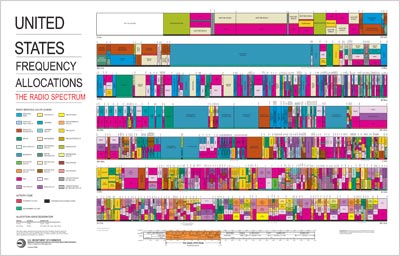
As you may have heard in the ubiquitous news reports, the FCC has posited the idea of a nation wide network for free Internet access. The effort is not altruistic but a carrot to spur on the growth and implementation of the 'White Spaces' frequency spectrum -(the 300 to 400 MHz range). Several reports have mentioned that the free portion would be 'adult content '  prohibited which those over 18 can opt in to, for a price.  We have seen several attempts at Muni-Fi systems but only the small township and hamlet systems appear to have any lasting life. Philadelphia struggled to build and maintain their free access system only to finally shut it down then re-start, sort of.


A truly free access nationwide Internet is a grand thing. Just the effect of bridging  the 'digital divide'  would be  significant in  and of itself. My question is just what price this freedom. Unlike the NY Public Library show, this price of freedom may just inhibit your access to it.  If anyone thinks that the entire Net Neutrality debate will not be finally fought out in this venue are to be sadly shocked. 


Who will determine what is adult content?


How will it avoid the blocking of terms like Breast Cancer rather than just Breast? (recall the gaffs the content protection software many public libraries faced?)


Who will determine which sites and which content will require a premium subscription?


Just how long before demand 'forces' providers to lobby the FCC to reduce the amount of free content to just a bare minimum?  There is only so much bandwidth you know.


Pay to Play ?


Monday, June 30, 2008

Goneril, Regan and Cordelia

EE times posted video and a short article on a symposium consisting of manufactures of three main technologies vying to be the wireless digital video delivery system.  While the event appeared cordial with pronouncements of coexistence and equitable market distribution, it is quite clear all are looking for blood in the water.  It is still possible at this juncture that all three technologies will find a place and coexist with the others but it will not, cannot be in the same market.


The full article and video clips are at http://www.eetimes.com/rss/showArticle.jhtml?articleID=208801236&cid=RSSfeed_eetimes_newsRSS


I suppose one's outlook all depends on whether you prefer the original play or the apologist performances of the 18th and 19th century.


Wednesday, April 16, 2008

Heisenberg Exits Forthwith, Whereabouts Uncertain

There are many dimensions to our universe, some say it is fixed at 4 or 5, others state a 12 dimensional universe actually makes the math in a grand unified theory nearly work.  A good entry level book on this subject is Hyperspace by Dr. Michio Kaku - http://www.amazon.com/Hyperspace-Scientific-Odyssey-Parallel-Universes/dp/0385477058 .


Space and Time are funny things, interrelated and so very separate. Into this fray comes the company Alien which has announced a product which can tell the speed and location of a tagged item. The article


RFID reader can now identify velocity, position of tags


http://www.news.com/8301-10784_3-9917346-7.html?part=rss&subj=news&tag=2547-1_3-0-20


discusses possible uses for airport and military cargo. I see the possibility of using this technology for environment automation. Many green initiatives require occupancy sensing to minimize energy use in unused rooms. Most of these 'people counters' are microwave sensors which only indicate movement or,when mounted to a door frame, numbers in and out of a room. This is a highly inefficient method as the timing between sensing a presence and sensing no presence is awkwardly long.  Imagine using this Alien RFID product to sense presence, speed of the person and by extension direction - to intelligently decide just how bright to make each room traveled through and prepare the next room to be entered.   This is a much more efficient method where the lights are kept on only to ensure an individual can see enough to travel through safely, no time delay.  This is only one possible application, silly versions can have doors open slower or faster depending on your travel speed - thus helping avoid a crash into a half open\closed door.


Now, does this make the   CERN ATLAS particle accelerator  unneeded?


Friday, April 4, 2008

MMMMMax Head- HeadRoom? No, its WiMax -Stutter Optional.

Those who have been long time readers of this blog will know my fascination with Sprint's WiMax plans.  True mobile broadband has remarkable potential not just for content on the go but to provide seamless content which can travel from mobile to home theater with the click of a docking station.


Sprint had some issues garnering any real productive support from partnerships, all while declaring WiMax a true 4G mobile standard.  The declaration irked the wireless telecom industry standards organization who would only comment that WiMax was to be viewed as a building block not and end unto itself for 4G.


Then the news stalled for awhile.


In the last week or so a number of article have started to show a revised plan and possible industry support.  There is also talk of spinning off the WiMax into a separate company. 


On the positive side there is the showing of a WiMax enabled Tablet PC from Nokia -(due out this summer)


Nokia Tablet to Use Sprint WiMax Network


http://www.nytimes.com/aponline/technology/AP-Wireless-Show-WiMax.html?ex=1364875200&en=fc218dd7d0ea2e58&ei=5088&partner=rssnyt&emc=rss


Then there are the partnerships, however limited - Comcast in is $1 billion while TW is at $500 million-which are viable as they have a great deal to gain if the plan is a success. 


Comcast and Time Warner to Bankroll WiMax Joint Venture


http://www.news.com/8301-10784_3-9903411-7.html?part=rss&subj=news&tag=2547-1_3-0-20


Cable company interest may not be the first entities one would think to partner with a wireless phone system but further thought shows it to be a great tactical move if it succeeds.  Phone and Cable companies have been making in roads into the others main market for the last few years-(cable offering VoIP while phone companies now offer cable like media content on their land lines).  Cable companies see WiMax -(as well as the 700MHz band just sold off and the 'White Spaces' proposals) as taking the fight back to the wired Telecoms.  The hope is to establish WiMax into what the now failed Muni-Fi system promised but failed to deliver though less then stellar data rates and some community resistance.  On its face WiMax broadband opens the market for a host of devices -iphone like- whose central function is Internet access with voice as a secondary feature. What has only been hinted at is the ability to use this backbone to provide real-time video services; this is what the cable companies want.   Imagine having access to the baseball game whilst on the bus, subway or at the Cafe.  Add to this the ability to pull up Internet for stats, twitter chats or your fantasy baseball team progress, all at wired broadband speed.  In a cradle to grave metaphor the WiMax partners envision you taking this real time content all the way home and continuing to use their service as your primary content provider.  In a system concept similar to wireless video and the 802.11n standard, the hope is for the user to take their WiMax device and connect it to a monitor when home - never missing moment of the show and never having to switch to a land line provider.


And then the realities of rolling an actual system\devices brings us back to the daily grind:


Sprint Delays WiMax Roll-out, Again


http://blog.wired.com/business/2008/04/sprints-xohm-de.htm


Plans are now for a summer 08 roll out but by delaying the commercial start this will allow for the hype generated by AT&T and Verizon to begin to influence corporate planners.


If any thing the WiMax concept and Mobile broadband interest rides along side the rise in demand  for mobile video content. I have long stated the Phil Swann Inverse Square Rule, Every time Mr. Swann -or someone on on his TV predictions forum- wonder aloud why anyone would want to view content on their iPhone type screens; the number of  consumers clamoring for it doubles.


Thursday, March 27, 2008

Its Just That Once You Accept One Into Your Neighborhood, They All Want In

If you have been paying any attention to the analog frequency sell off conducted by the FCC, you will undoubtedly have noticed that Google is just moderately interested in the proceedings.


Google has for some time been working on getting itinerant device access to what is commonly known in the industry as RF white spaces. White Space refers to the valleys which exist between the Color, Picture and Sound spikes of analog television signals.  (Typically an analog TV signal has a separate modulated RF signal for the Color, Picture and Sound, all three are received by the television and processed to complete the signal). 


White Spaces are typically where the FCC allowed the use of itinerant low power RF transmitters for wireless microphones and Intercom systems.  While TV broadcast signals are very powerful (typically 50k watts) for the most part you could hide a great deal of microphones in between the spikes. If you lived in the sticks, or just outside a major urban area, you could rely on finding some portion of the spectrum which was free of a TV channel.  In heavily saturated urban areas - such as NYC- you relied on proximity effect hoping that as the microphone would be the stronger signal - locally- to the receiver.  For the most part this usually worked out very well with only the occasional interference and then the dynamic compression circuits would kick in, minimizing the audience impact. In sections of the City, like Broadway, you also have to contend with wireless systems in adjacent theaters. The logistics are remarkable.


To this mix Google wants to add the mobile communications devices which would use access points placed within the remaining white space areas to facilitate Wifi\Wimax type  'local access'. The concern of many in the commercial market is the possible havoc this could causes to existing system and make overly complicated new installs. Google's answer is to institute a device awareness protocol which would recognize that at a device or devices are already in use and not transmit until clear. I would surmise that the withholding of transmission would only be until it could find a time slot to transmit.  Live audio is a continuous stream - whether analog or digitized in the microphone - and does not allow for a momentary pause to allow other devices access to the frequency.   As a compromise a few others have offered up a fixed licensing scheme but it has been met with minimal enthusiasm. As I no longer work in the event staging world this is a minimal concern, but for corporate\commercial installers this is an issue to keep a close eye on.


Two good articles which cover this story well are at


CTIA urges FCC to license -- and auction -- TV white spaces


http://www.rcrnews.com/apps/pbcs.dll/article?AID=/20080327/FREE/120719096/1007


Google Proposal for 'Wi-Fi on Steroids'


http://www.news.com/8301-10784_3-9901747-7.html?part=rss&subj=news&tag=2547-1_3-0-20


Inevitably the spectrum will be auctioned off and utilized for a mass consumer set of services.  You may have to become accustomed to lower quality audio from you live performances or see the reemergence of old school wired, hands free microphones.  okay that was a joke, sort of. It is clear that the tiny market of wireless audio systems will be overwhelmed by the tsunami of consumer traffic. 


I touched on this in Issue 14 Volume 3 of the old newsletter (July of 07)


See   http://tuckerstuesday.typepad.com/tuckerstuesday/2007/06/index.html  for the original link and my commentary.


Wednesday, March 26, 2008

Can I Has a New Bogeyman?

Trolling around tonight I found an article on a town rejecting a distributed Wifi system based on fears of  health risks from the RF. 


WiFi Fear Kills Free Local WiFi Plan -   http://techdirt.com/articles/20080325/002149639.shtml


The article provides only  a snarky commentary with no background information nor links to an official news story, I was able to find a number of sites corroborating the story but only one had any real credentials - The San Franscisco Chronicle:  http://news.sfgate.com/cgi-bin/article.cgi?f=/n/a/2008/03/24/state/n100739D20.DTL


I had a bit to say about this type of hysteria back in  October 07. http://tuckerstuesday.typepad.com/tuckerstuesday/2007/10/index.html


The communities concern did not center on a relatively high power Muni-fi system but a small distributed access point setup.  The system proposed would have less radiated power then I am exposed to daily at my work -(where we have no less then 10 wifi system running  constantly).


Why do humans need to find new bogeymen whose threat to humanity becomes more ominous with each iteration ?  This is a question  which Micheal Shermer could examine far more eloquently then I;  the reality is no medical proof has been offered up after nearly 25+ years of medical studies on High Power lines, proximity to transmission towers, etc.  The unstated message here is that not only will the Internet rot your brain, it will cause a tumor as well.


Friday, March 21, 2008

Mass vs. Volume or Factors in Displacement

So the FCC has finally been able to presumptively sell off the soon to be unused analog television frequencies for over 19 billion dollars.  Unfortunately the spectrum went mostly to one company. When the FCC announced the sale of the frequencies it hailed the action as a dawn of a new age of innovative communications. The fact is, it took a classic chess move on the part of Google just to insure 'open access for other vendors.  (Google convinced the FCC to accept the concept of open access if a minimum bid was received. Google then bid the minimum, made quite noise about being interested in expanding to telecom then watched as the bidding frenzy ensued.


What does this mean for the custom AV industry? For starters if may mean that Sprint and its WiMax may have lost the mobile content war, for I am sure that Verizon has plans afoot to use the acquired frequency spectrum for more then just better coverage.  Content delivery is where the future profits reside.   Verizon has stated that they intend to honor the open access clause but past closed market practices lend me to believe that they will now work to overturn the clause and elbow out all others.  It could very well be a case of  Volume vs Mass. I have this image of  dropping ice cubes in a cup of water, when the ice fully melts the level in the cup does not change-(i am excluding factors such as evaporation and condensation).


NPR had the best general coverage on this FCC spectrum sale


FCC Auctions Off Airwaves


http://www.npr.org/templates/story/story.php?storyId=88690020&ft=1&f=1019


Key Part of the Wireless Spectrum Goes Unused


http://www.npr.org/templates/story/story.php?storyId=88650396&ft=1&f=1019